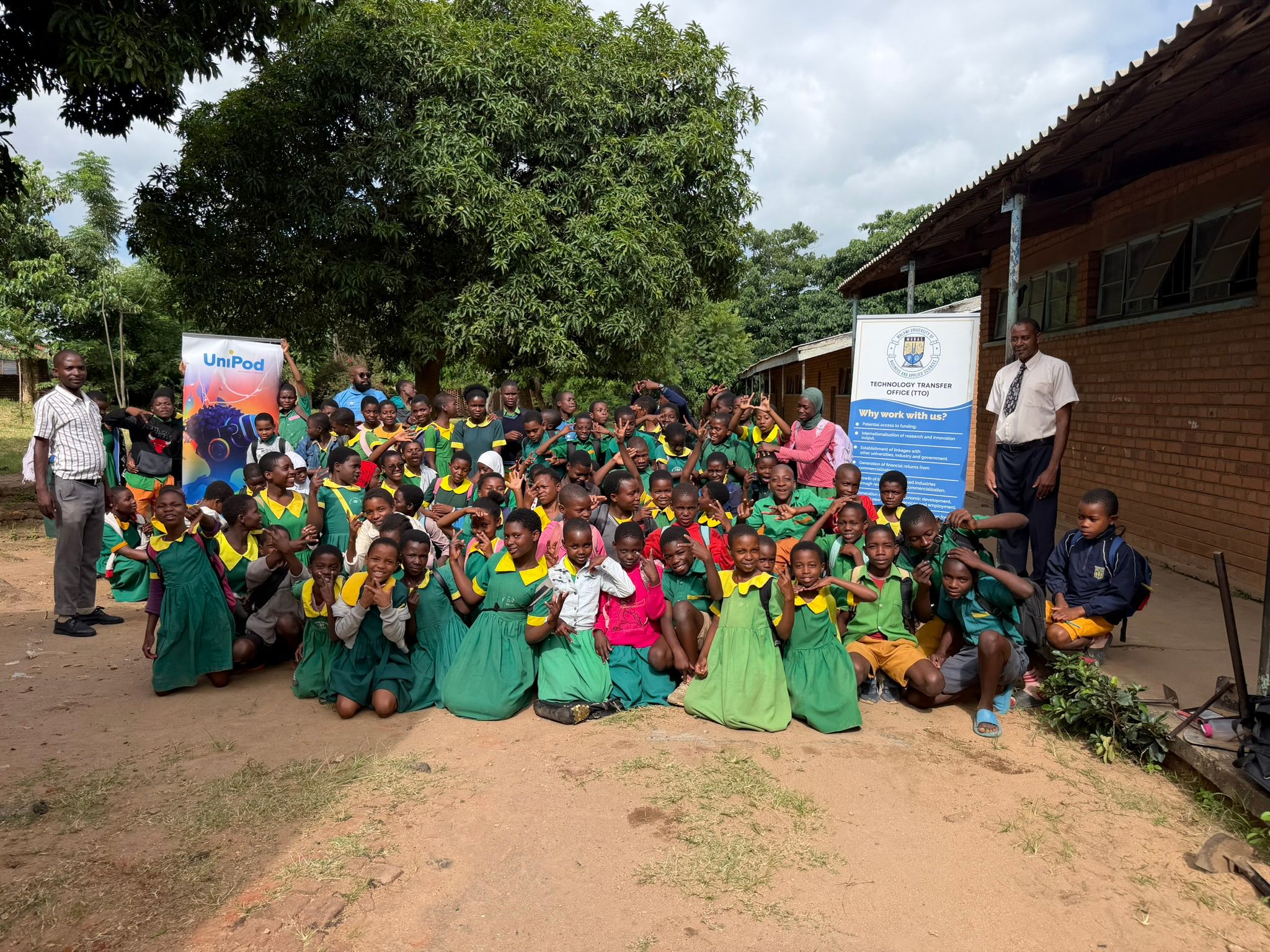
How Sunlight and Rainwater Could Transform Healthcare in Rural Malawi
For years, Dr. Christabel Kambala has worked closely with communities facing some of Malawi's most pressing public health challenges. One issue continues to surface wherever she goes: access to safe water.
In many rural healthcare facilities, clean and reliable water is not guaranteed. Health workers often depend on boreholes, while piped water systems remain unavailable or unreliable. For maternity wards and healthcare centers, this challenge can affect hygiene, infection prevention, and ultimately patient care.
Rather than accepting the situation, Dr Kambala and her team began asking a simple question:
Could sunlight and rainwater become part of the solution?
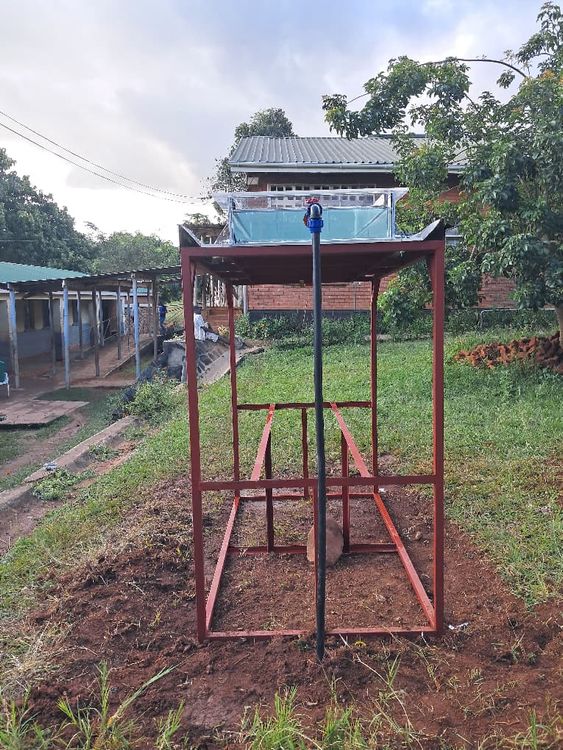
As co-lead of the SURG-Water Project, Dr. Kambala is helping drive the development of an innovative Solar Water Disinfection (SODIS) system designed to harvest rainwater and purify it using solar energy. The technology aims to provide healthcare facilities with a sustainable source of safe water using resources that are already freely available in their environment.
The project is being implemented through a partnership between MUBAS and the Royal College of Surgeons in Ireland (RCSI), bringing together expertise in public health, engineering, and innovation.
Turning an idea into a functional system, however, requires more than research. It requires design, testing, and fabrication.
That is where UniPod Malawi comes in.
Working alongside the project team, UniPod is providing detailed design assessments and leading the fabrication of four reactor systems based on two original reactor concepts developed by the project owners. By translating these concepts into functional prototypes, UniPod is helping bridge the gap between research and real-world application.
The goal is simple but powerful: provide rural healthcare facilities with access to safer water while reducing dependence on limited water infrastructure.
If successful, the impact could extend far beyond a single hospital or community. The project represents a practical example of how local innovation, engineering, and research partnerships can work together to solve challenges that affect thousands of people.
For Dr. Kambala, the work is about more than technology. It is about creating healthier environments for patients, supporting healthcare workers, and ensuring that communities have access to one of life's most necessary resources.
By harnessing the power of the sun and the rain, the SURG-Water SODIS Project is demonstrating how African-led innovation can transform everyday resources into solutions that improve lives.
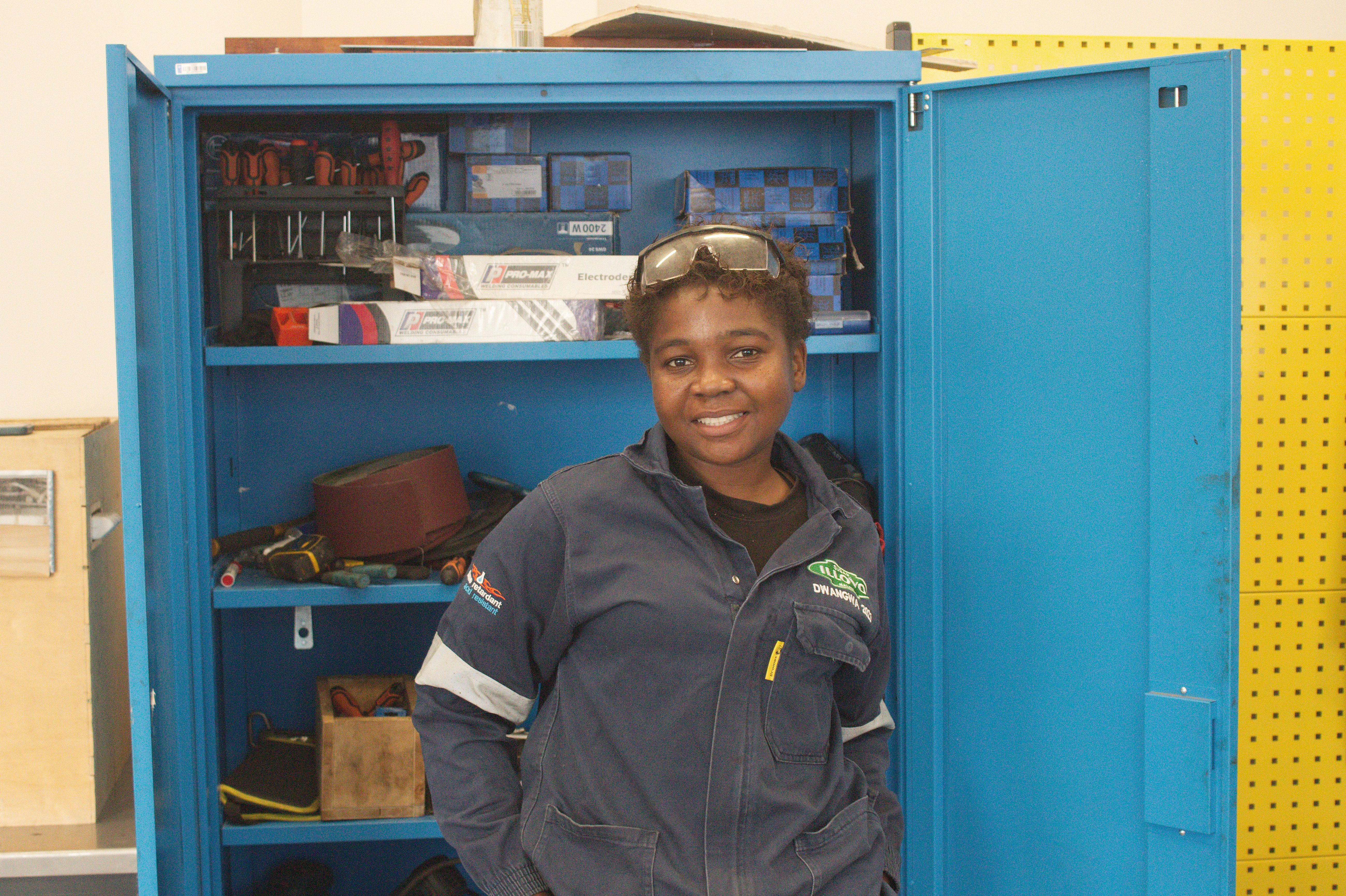
From Skills to Enterprise: Tadala Chazuka’s Zantchito Journey
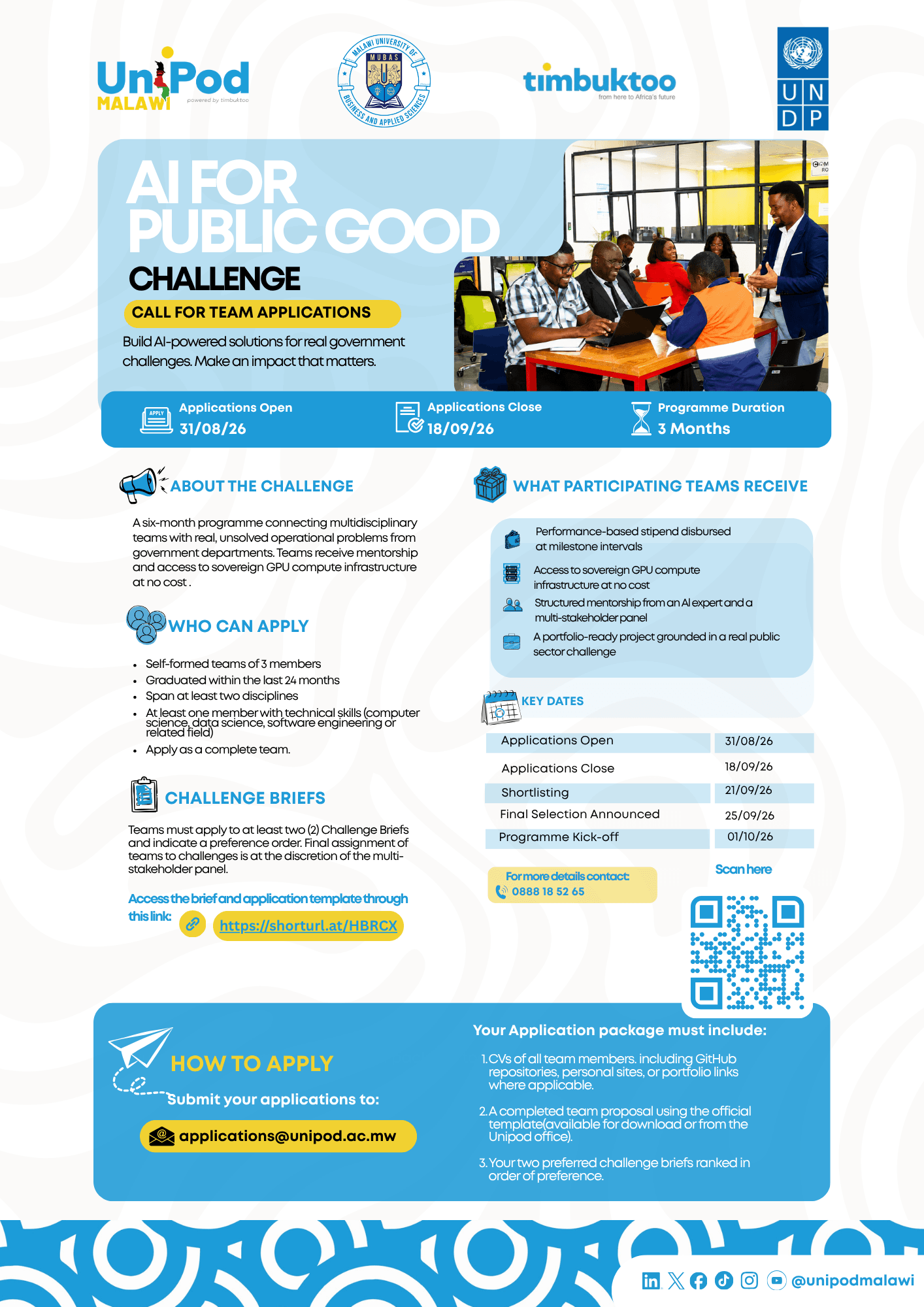
Applications Now Open for the AI for Public Good Challenge
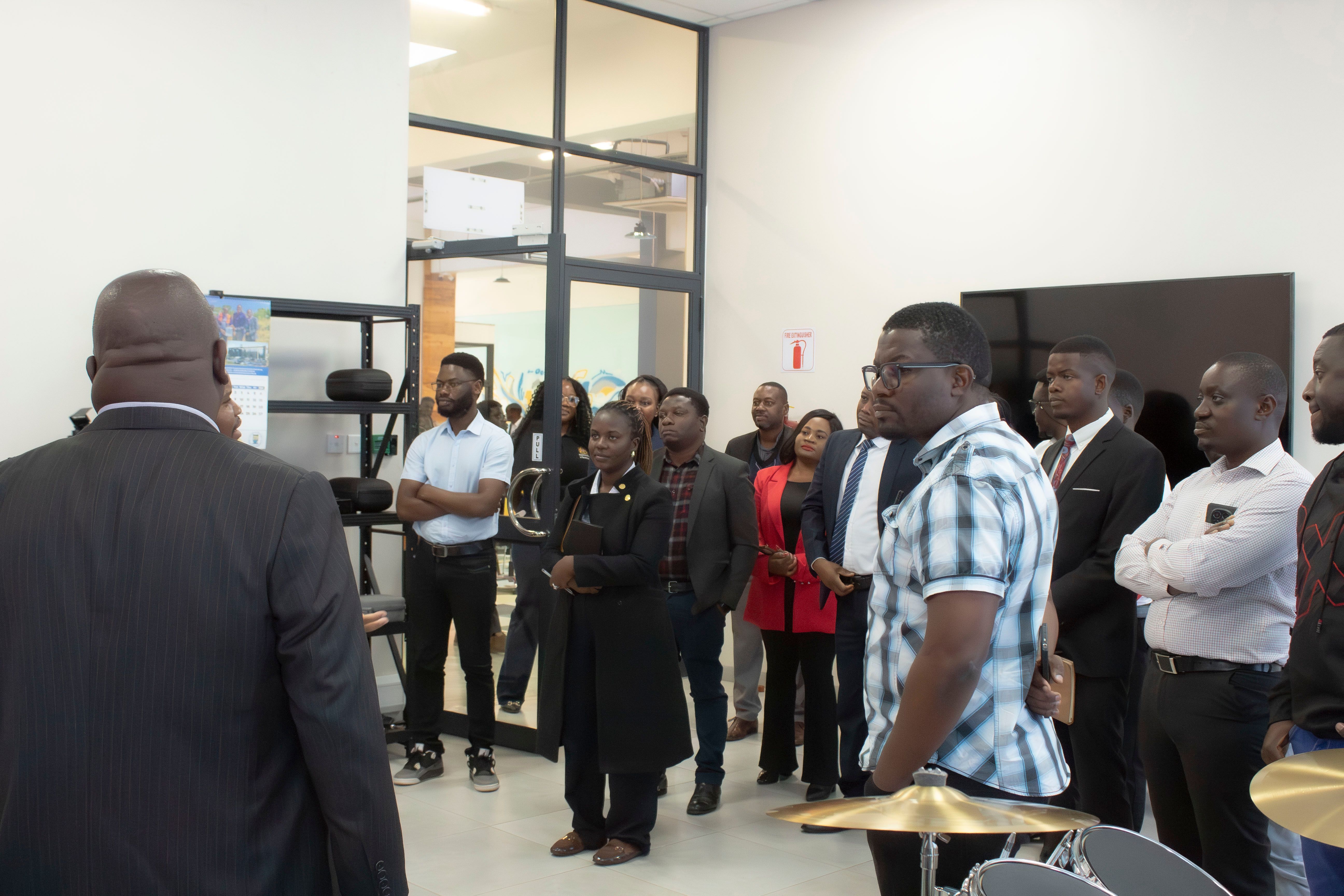
Malawi Government Stakeholders Convene at UniPod to Shape AI Solutions for Public Service Delivery